1996–2026
Daysog: The West End Story
His father came from a town on Leyte. His mother was five years old in Nagasaki on August 9, 1945. Their son grew up next to a live Naval Air Station, and then spent twenty years helping turn it into something civilian.
Tony is a lifelong West Ender of Filipino and Japanese descent, whose late parents (Ricardo and Tsutako) never attended college but made sure their four kids would benefit from Alameda’s schools, go on to attend college, and lead successful, productive lives.
Below is a 1993 photo showing Tony graduating from UC Berkeley’s Master’s Program in City and Regional Planning – he also earned his BA from Cal in 1989 studying US History.

1. Coming of Age in Alameda’s West End of the 1970s
Tony came of age in the Alameda of the 1970s and 1980s on the 100 block of Santa Clara Avenue, residing next door to the military base when it was still operating.
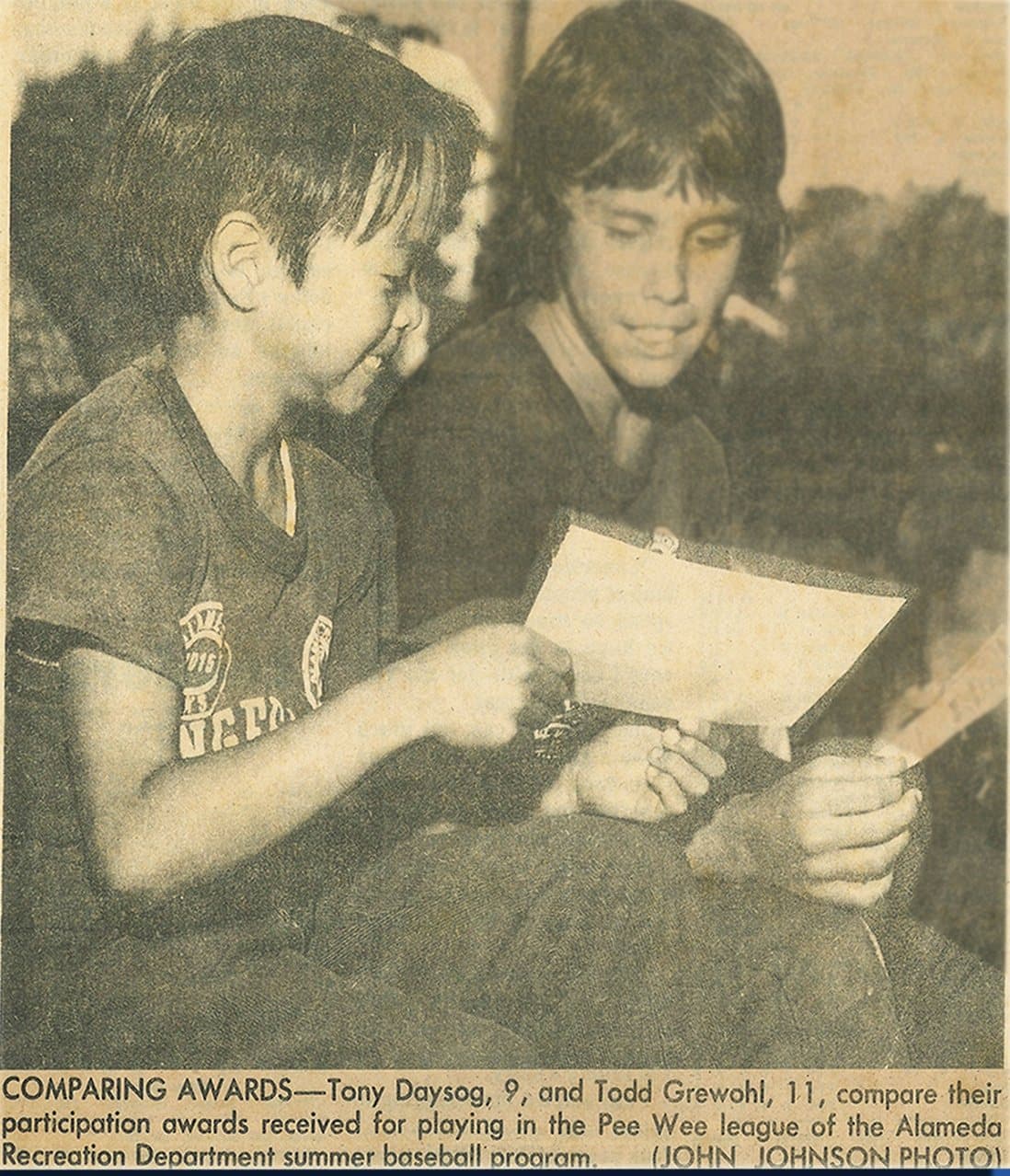
He attended West End schools – Paden Elementary, Chipman Middle, and Encinal, and played at Longfellow Park. He graduated from Encinal in 1984, where he served as Student Body President in the spring of 1984, and Senior Class President in the fall of 1983.
While the West End that Tony grew up in was considered the “wrong side of the tracks” in the 1970s, both his parents and his many teachers taught him that no one is defined by the social or economic station where they started, or the neighborhood they came from, and that in America the sky is the limit. They all encouraged Tony and his siblings to pursue interests beyond the classroom that would help them fulfill their potential.
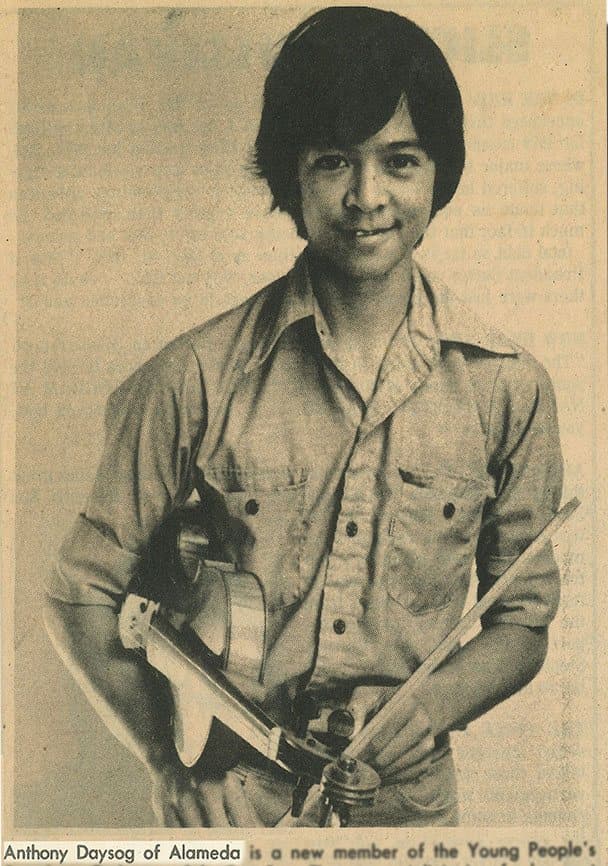

2. Fighting for the Underdog
In his youth, Alameda’s East End–West End divide was still very much intact. Growing up in Alameda’s West End in the 1970s shaped Tony’s approach to life generally and public service particularly: to fight for the underdog.
Thus, a central part of his campaign for Mayor is to fight for vulnerable populations caught in the crossfire of today’s national culture wars.
LGBTQ+: Most recently in 2025 he championed creating the LGBTQ+ action plan, with special attention devoted to protecting transgender youths who are sadly especially targeted by bigotry. (“City Council Endorses New LGBTQ Action Plan”, Alameda Post, alamedapost.com)
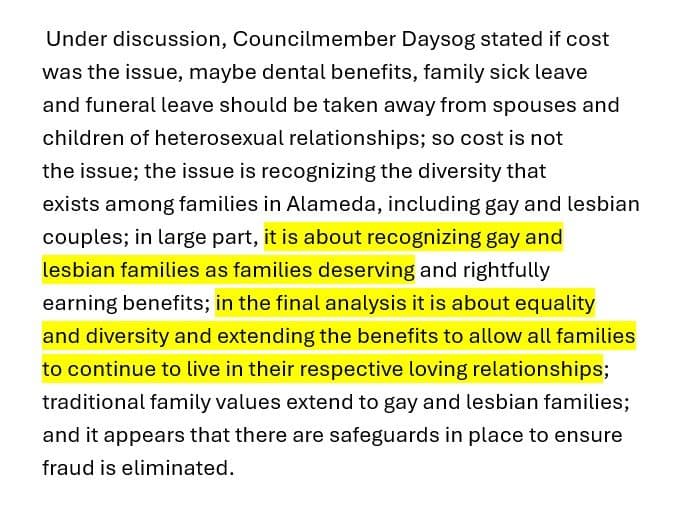
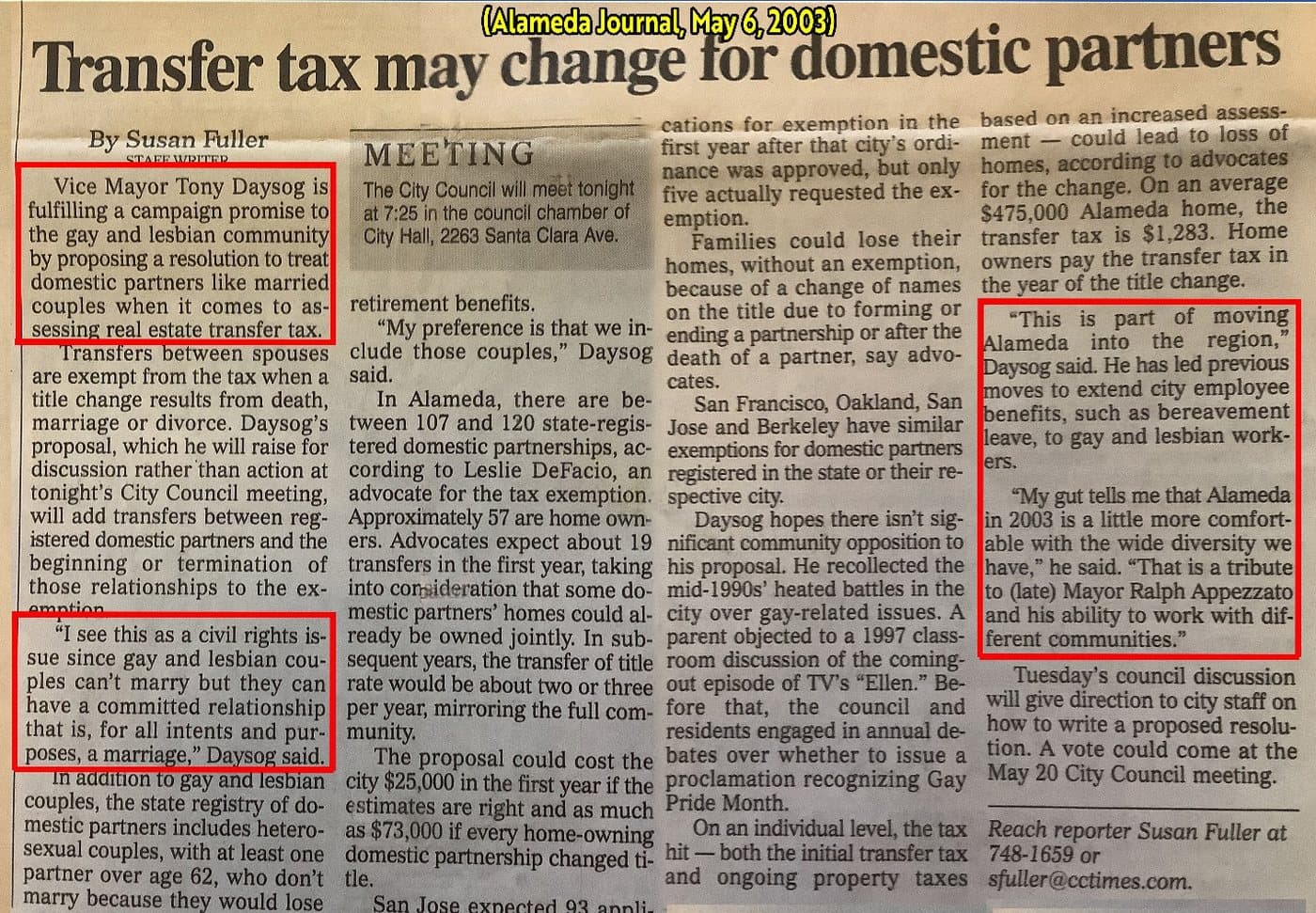
His efforts on behalf of Alameda’s LGBTQ+ community started much earlier than 2025: as early as 1997 in his first year on City Council, he provided the key vote to extend benefits to partners of LGBTQ+ city workers. At that time, LGBTQ+ couples could not legally marry and thus spouses of LGBTQ+ city employees were not eligible for benefits since family benefits were extended only to those in heterosexual relationships.
Tony changed that – pointing out that bigotry was at the heart of unfair treatment of LGBTQ+ city workers. Below are his comments in the pivotal 1997 meeting (docs.alamedaca.gov):
Tony also changed local codes in 2003 to exempt spouses of all LGBTQ+ couples in Alameda from having to pay the real estate transfer tax upon occurrence of certain events, so that not only heterosexual couples would qualify for this exemption.
Other Vulnerable Communities: Other vulnerable communities whose causes the Councilmember is championing include Alameda’s immigrant community, for whom in 2026 he has pursued policies to disallow use of city-owned properties as staging grounds by I.C.E. (“Local Efforts to Counter ICE Don’t Include Coast Guard Island”, Alameda Post, alamedapost.com).
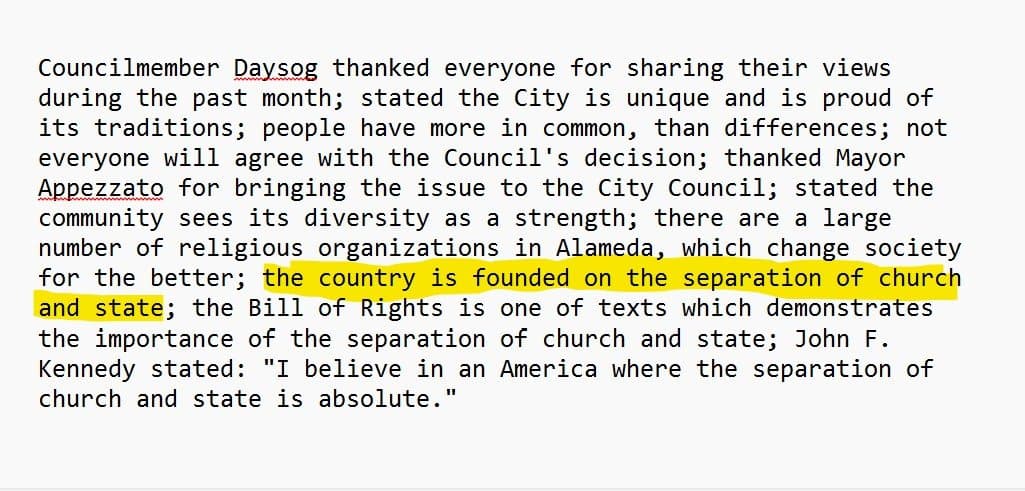
Also: in speaking out recently in 2023, 2024, and yet again in 2025 against bigoted statements aimed at persons of the Jewish faith (jweekly.com), Tony felt a certain sadness to see such bigoted attacks today when, more than 20 years before in 2001, they and Tony worked so hard to make City Hall a welcoming place for all people. Below are minutes from a pivotal October 2001 meeting (docs.alamedaca.gov):
3. Alameda Point – Military Base Conversion
Because the Councilmember grew up literally next to Alameda Point when it was an operating military base, he was keenly interested in how the closed military base was to be converted to civilian uses. Tony has been involved in every important Alameda Point decision made over the thirty-year period between 1996 and 2026.
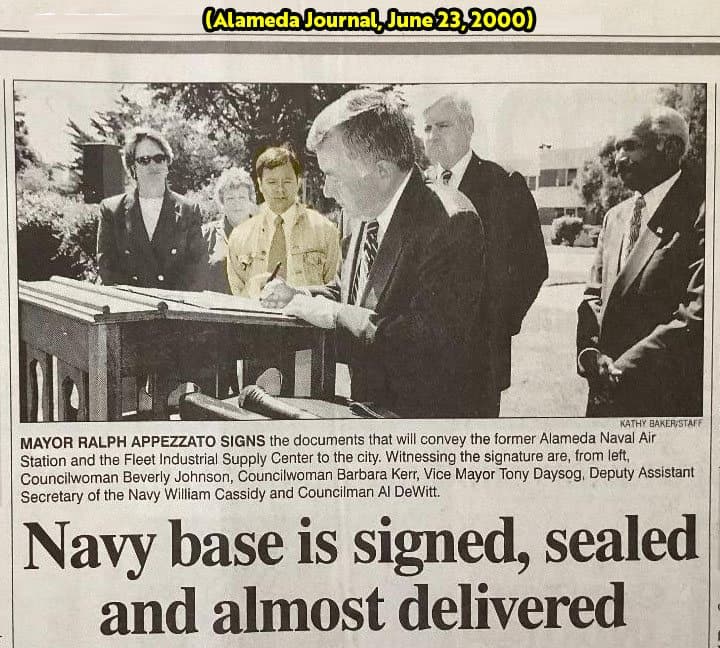
On City Council, Daysog is and has been a progressive force, creating policies, championing major landmark Alameda Point projects, and moving along many other projects.
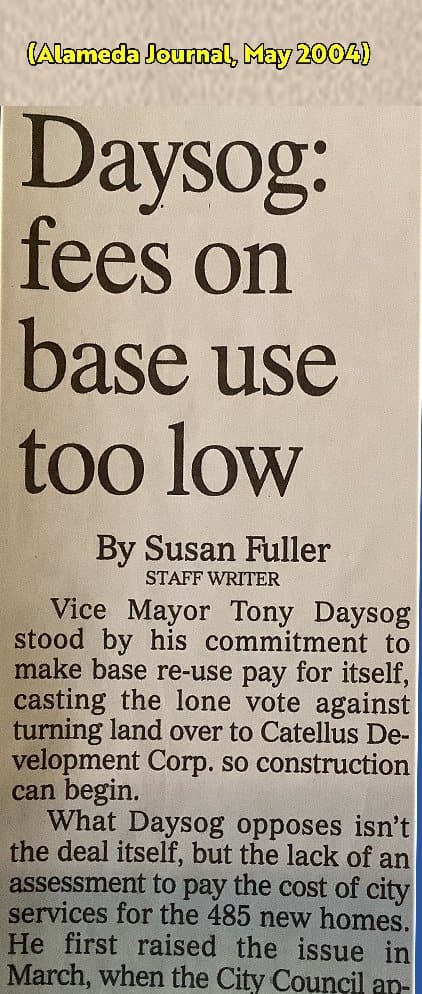
“Base Shall Pay for Itself Policy”: Because of his professional urban planning background, Daysog understood that the designation of Alameda Point in the 1990s as a redevelopment area would result in a peculiarity due to California redevelopment law in place then – the vast bulk of property taxes would go into the redevelopment fund that couldn’t be used to fund city services at Alameda Point.
That, combined with the lessening of federal base closure public safety subsidies with the passage of each year after 1994, led Daysog to call for policies to ensure that base closure would not siphon scarce City Hall funds away from historic Alameda.
Thus was born “the base must pay for itself policy”, which is still in force to this day. Daysog subsequently codified the policy created in the late 1990s in the form of a municipal service fee adopted in 2004 (docs.alamedaca.gov).
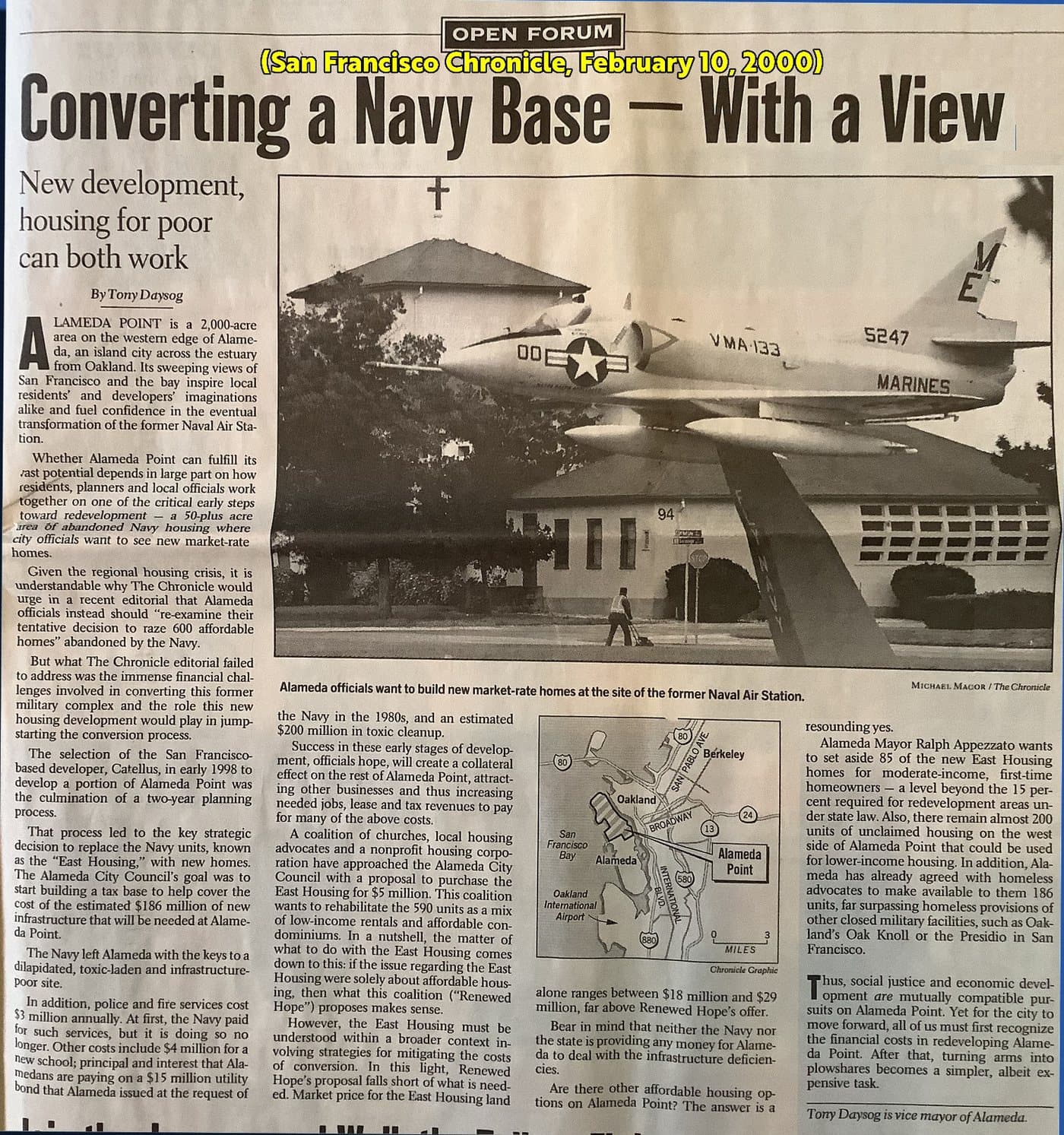
Bayport Residential Development: Daysog championed the development of what became the Bayport Residential Development, which is located next to the College of Alameda.
He championed this project because in his view the West End needed a high-quality residential development – and because he knew such a development from the outset of military conversion would set the tone for each subsequent major project at Alameda Point.
In the San Francisco Chronicle opinion editorial below that he authored, Daysog outlined why the Bayport development was imperative.
Alameda Point Twenty-Five Percent Affordable Housing Requirement: In early 2001, working closely with Mayor Ralph Appezzato, Councilmember Daysog in the chambers of Superior Court Judge Richard Hodges, who was facilitating talks, agreed with activists’ request to increase the affordable housing requirement to 25 percent of all new housing built at Alameda Point, versus the 20 percent proposed by Appezzato and Daysog. Thus was born the 25 percent affordable housing requirement (docs.alamedaca.gov).
Major Alameda Point projects that Daysog voted for:
- Alameda Point Site A Mixed Use and Waterfront Park (2015) (eastbaytimes.com)
- Alameda Landing Target, Residential, Bohol Circle Immigrant Park Project (2006) (docs.alamedaca.gov)
- Alameda Point RESHAP Residential Project (2019) (2026) (alamedapost.com)
- Antiques by the Bay (1998) (docs.alamedaca.gov)
- Radium Theater Performing Arts Center (2026) (alamedapost.com)
4. Other Select Noteworthy Projects Championed by Daysog 1996–2026
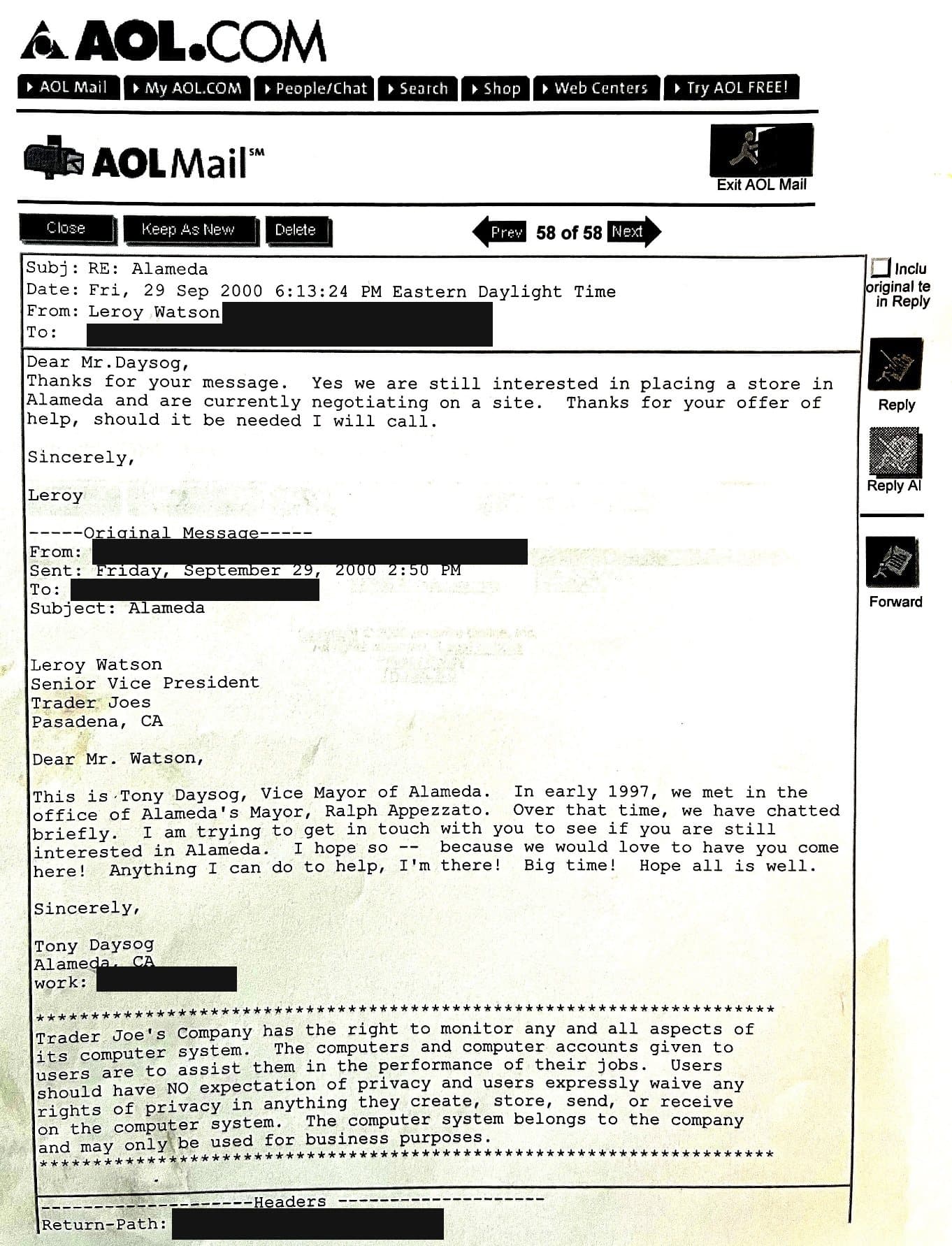
Trader Joe’s: Tony directly helped to bring Trader Joe’s to Alameda via constant contact with Trader Joe’s, always letting them know we eagerly wanted this store (docs.alamedaca.gov).
Edison Elementary School: Installation of Four-Way Stop Signs at Lincoln and Pearl (docs.alamedaca.gov)
Franklin Elementary School: Installation of Four-Way Stop Sign at San Antonio and Paru (docs.alamedaca.gov)
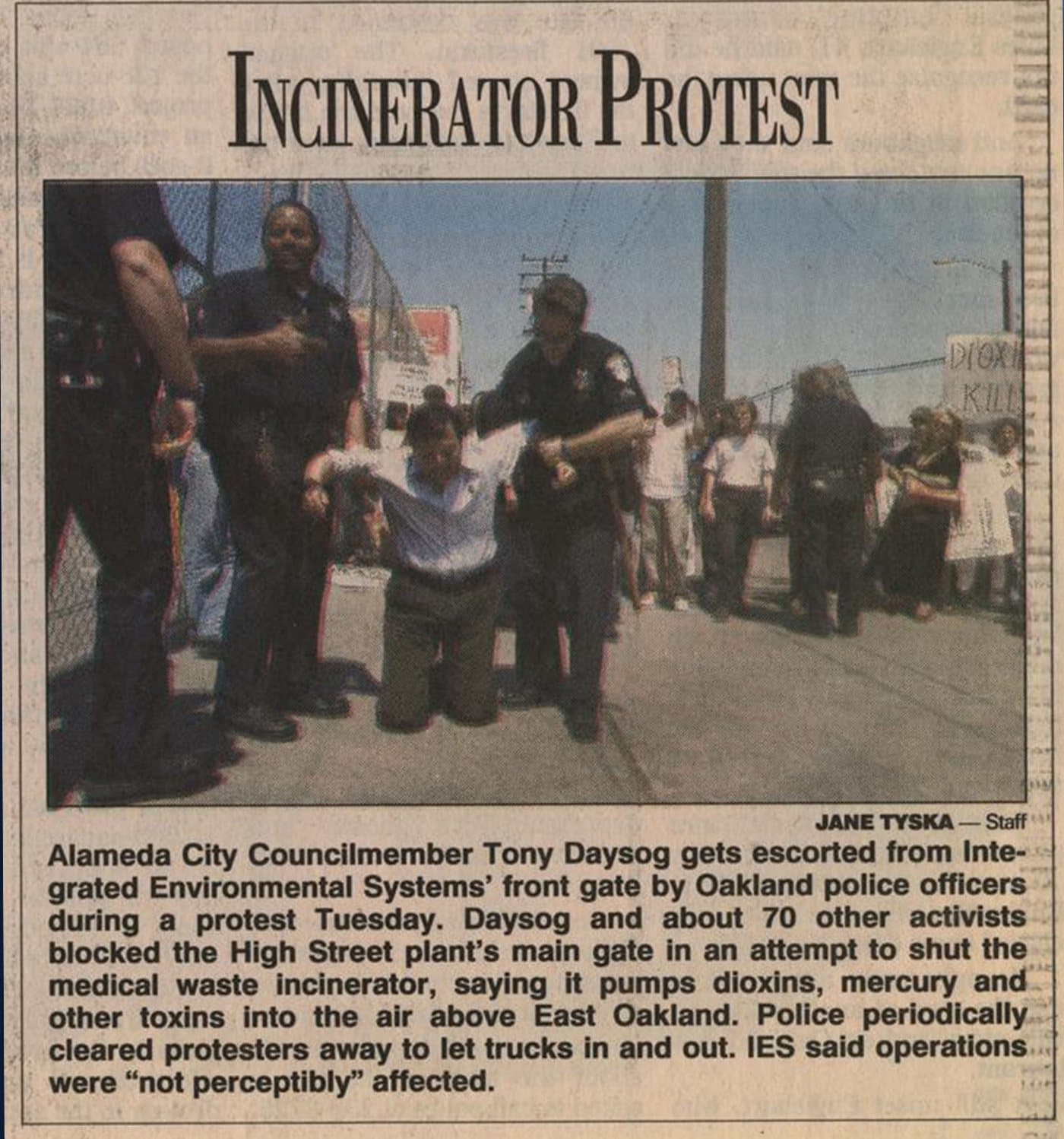
Shutting Down Incinerator Near Fernside Neighborhood (2001) (sfgate.com)
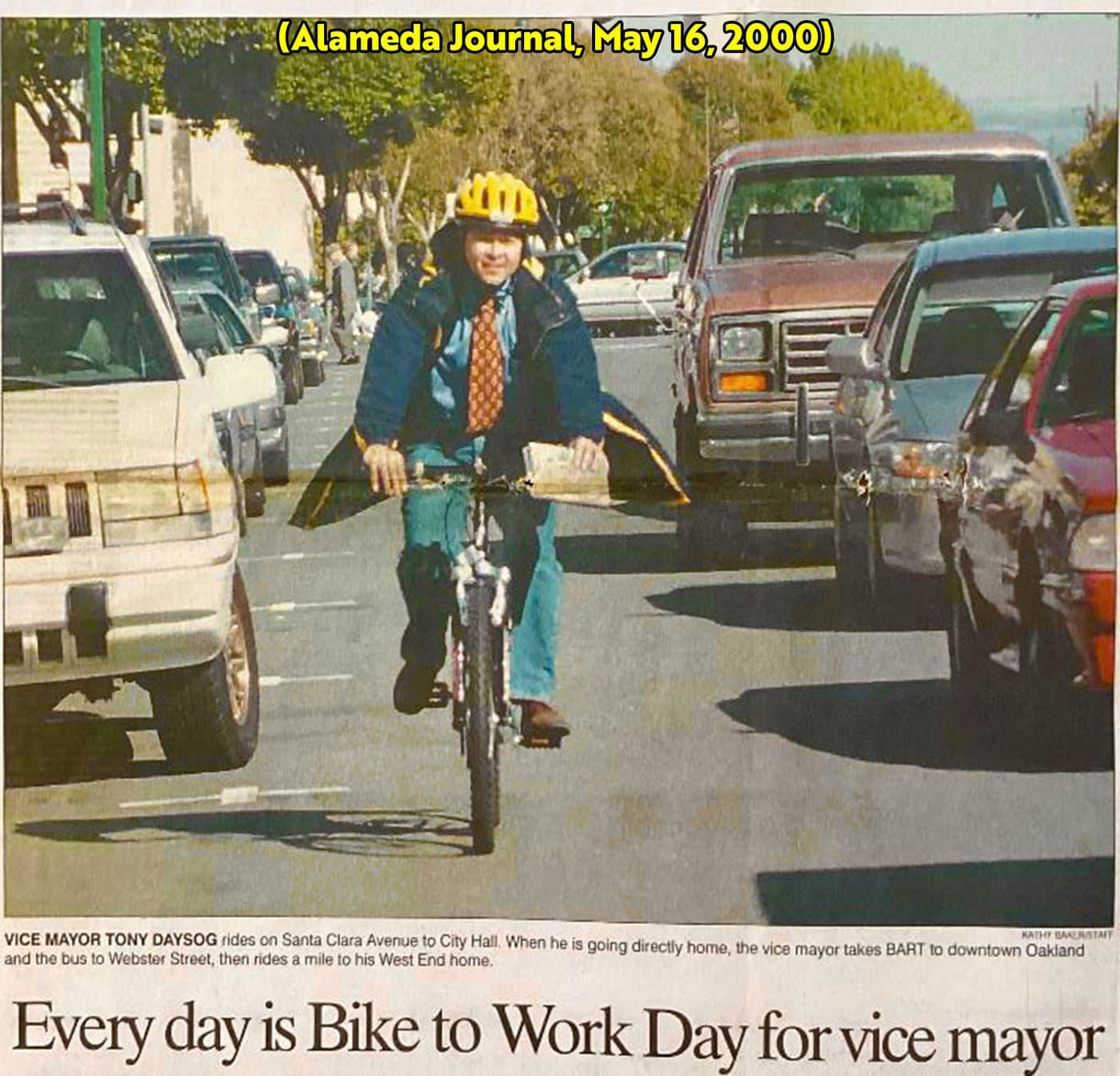
Champions Alternative Transit: Daysog is an urban planner who is a lifelong bus rider and a lifelong advocate for alternative forms of transit.

Protecting Harbor Bay Isle and Bay Farm Communities: Tony has a history of working on behalf of ZIP Code 94502. Responding to concerns about the state of the Harbor Bay Shopping Center, he successfully placed on the City Council agenda a recommendation to create a “vacancy tax” on large abandoned and vacant retail spaces (alameda.legistar.com).
Here he is discussing on the KTVU Morning Show why he helped stop a mega-casino that was slated for an area in Oakland close to 94502 (youtube.com).

Here he is successfully rallying his fellow Councilmembers to reject City Hall staff’s “go-along-to-get-along” approach to dealing with the Port of Oakland’s forthcoming airport expansion, which would uniquely affect ZIP Code 94502 given its proximity to OAK (youtube.com).